Soot deposition behaves as an active corrosive agent rather than a passive dust layer. In high-temperature combustion environments, synthetic textiles, vinyl flooring, and petroleum-based building materials produce…
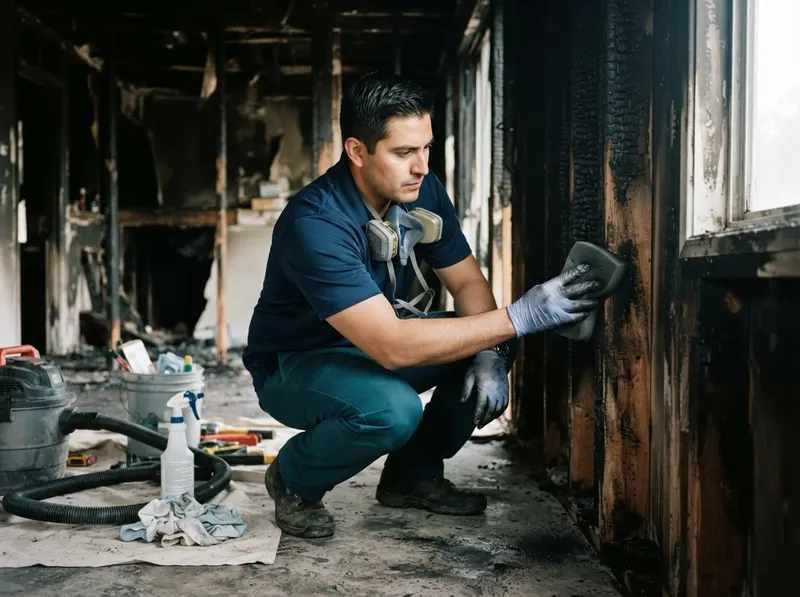
Soot deposition behaves as an active corrosive agent rather than a passive dust layer. In high-temperature combustion environments, synthetic textiles, vinyl flooring, and petroleum-based building materials produce greasy, acidic films. When these particles settle across drywall in Encino or decorative plaster in Los Feliz, relative indoor humidity accelerates irreversible surface pitting. Untreated soot with a pH between 2.0 and 4.0 dissolves paint finishes, permanently clouds glass, and tarnishes brass fixtures within 72 hours. Attempting to wipe these residues with consumer liquid cleaners creates immediate wet-bonding, driving ultrafine polycyclic aromatic hydrocarbons deeper into drywall pores. Professional protocol isolates dry particulate matter through vulcanized rubber sponge agitation and vacuum systems running certified 99.97% HEPA filtration before any liquid balancing agent contacts the substrate.
Microclimate variations across Los Angeles dictate distinct decontamination strategies. In coastal neighborhoods like Pacific Palisades and Brentwood, morning marine layers deposit elevated ambient moisture that reacts with dry soot, forming sulfuric and nitric acid films on exterior stucco and interior framing. Conversely, hot inland conditions in Studio City, Northridge, and the San Fernando Valley create hyper-dry smoke environments that lodge microscopic carbon flakes inside framing crevices and attic insulation. Dense urban multi-family units in Koreatown, Silver Lake, and Boyle Heights introduce cross-contamination risks through shared walls, utility chases, and corridor HVAC returns. Prime Fire Damage Restoration establishes negative pressure air filtration immediately upon entry to prevent airborne soot particles from traveling into unaffected rooms.
Property restoration timelines depend on distinguishing structural salvage from total material loss. Drywall saturated with heavy oily soot from burned plastics requires controlled structural removal, whereas non-porous glazed tiles, sealed hardwood, and steel framing tolerate deep alkaline wash restoration. Choosing surface restoration over premature structural tear-out preserves historic building elements common throughout Los Angeles, though non-porous decontamination requires intensive contact time to pull embedded odors from microscopic crevices. In contrast, total demolition guarantees baseline elimination of contaminated materials but increases overall reconstruction costs and municipal permitting review periods.
Every job gets a firm, written price after a free on-site visit.
Tell us about your soot removal and surface decontamination job in los angeles and we'll send a clear, written quote, usually the same day.
 Prime Fire Damage Restoration